Quick answers
What is Retatrutide and what is it used for in research?
How does Retatrutide work?
What is the typical Retatrutide research dose?
Where can I buy Retatrutide in Thailand?
How fast can Retatrutide be delivered in Thailand?
What is Retatrutide?
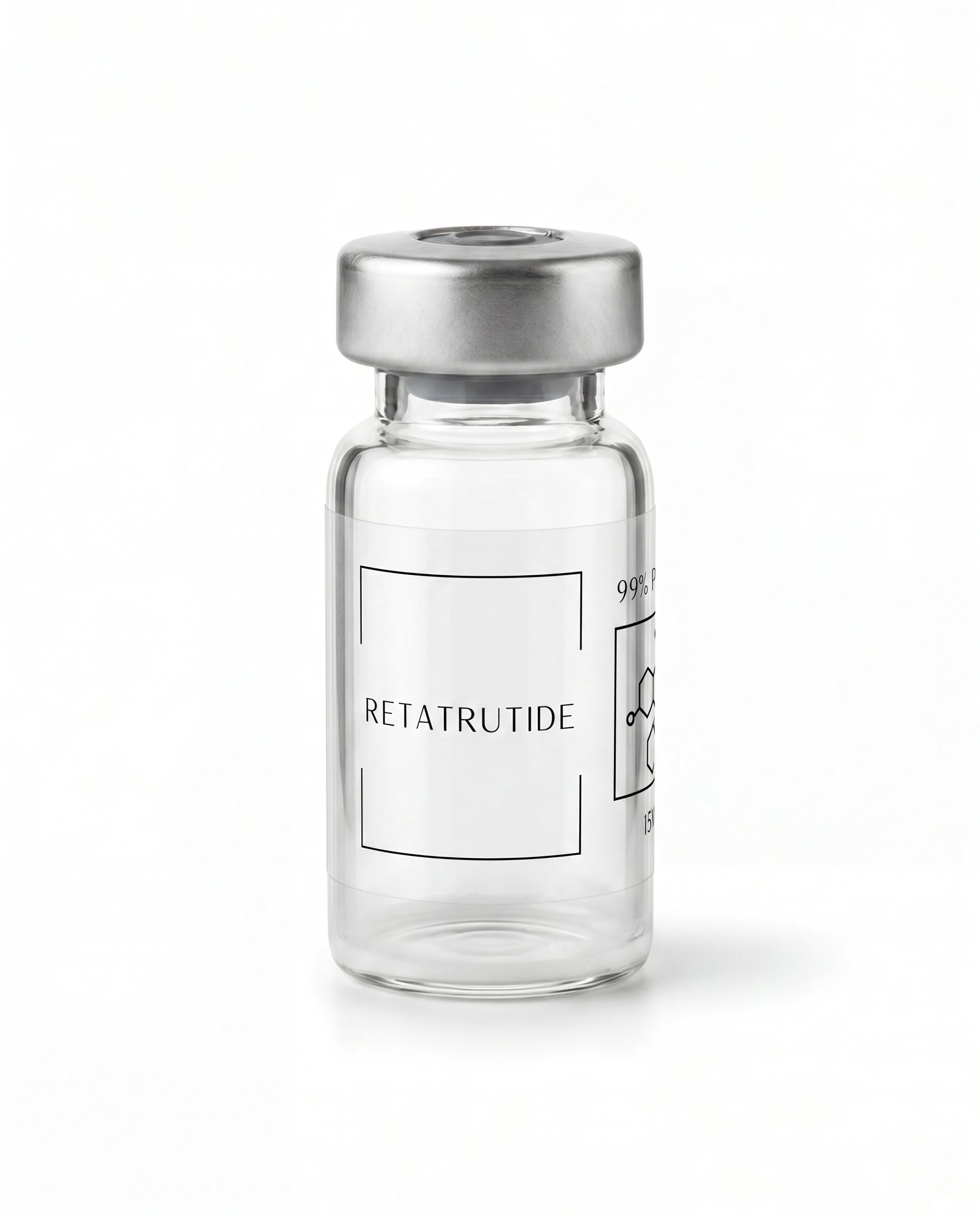
Retatrutide is a research peptide in the GLP-1 Metabolic class. Triple agonist: GLP-1, GIP, and glucagon receptor. It is studied at per-dose ranges of 0.5–12 mg / week (0.5–12 mg weekly), administered weekly sc over cycles of research phase. Supplied in Thailand by Thailand Peptides, Bangkok-based, research use only.
Triple-agonist peptide showing dose-dependent weight reduction in Phase 2. Glucagon component drives additional energy expenditure.
Published and preclinical data are summarised below; dose ranges shown reflect protocols in the research literature and should be interpreted accordingly.
How does Retatrutide work?
Retatrutide is a single-molecule triple agonist at GLP-1, GIP, and glucagon receptors. Glucagon-receptor activity increases hepatic glucose output and energy expenditure, which, when balanced against the glycaemic and satiety effects of GIP/GLP-1 co-agonism, produces dose-dependent weight loss greater than that observed with dual or mono-agonists in published Phase 2 trials.
Receptor binding affinity and post-receptor signalling for Retatrutide remain areas of active investigation; several proposed effects within the GLP-1 Metabolic class are currently supported only by in-vitro or rodent data, and should be interpreted accordingly.
Retatrutide pharmacokinetics
- Half-life
- Approximately 6 days in Phase 2 data, supporting weekly administration.
- Bioavailability
- SC bioavailability consistent with other fatty-acid-modified peptide agonists in this class.
- Route of administration
- Subcutaneous injection once weekly in reported trials.
- Metabolic clearance
- Proteolytic; long-term safety and clearance pathways still under active investigation.
Retatrutide research timeline
- 2023 Jastreboff et al., Phase 2 obesity trial showing dose-dependent weight reduction up to ~24% (N Engl J Med).
Retatrutide dosage & protocol
Reference protocol for Retatrutide (research context only, drawn from published literature):
- Per dose: 0.5–12 mg / week
- Weekly total: 0.5–12 mg
- Frequency: Weekly SC
- Cycle: Research phase
Retatrutide injection & handling
- Reconstitution
- Investigational product supplied per trial protocol; no consumer product yet.
- Storage
- Refrigerated per supplier specification.
- Sites used in the research literature
- Subcutaneous abdomen or thigh in reported research.
Handling notes reflect methods used in published research protocols, not medical dosing guidance.
Stacking Retatrutide
Commonly referenced pairing with Retatrutide: Monotherapy. Stacking rationale should be grounded in complementary mechanisms, not additive speculation; interactions at shared receptors or enzymatic pathways should be accounted for. Both compounds in a Retatrutide stack are supplied by Thailand Peptides on the same order via the Bangkok research desk.
Contraindications
Unestablished safety profile. Additional caution is warranted in individuals with hepatic or renal impairment, endocrine disorders, or concurrent pharmacotherapy affecting the pathways described above.
Further reading
- Fundamentals · 9 min read Understanding Peptide Reconstitution: A Research Guide Practical guide to reconstituting lyophilized research peptides. Choosing a diluent, concentration math, injection-site-ready volumes, and the literature…
- Fundamentals · 10 min read Subcutaneous vs Intramuscular Injection: Research Considerations The two main parenteral routes for research peptides behave differently. This guide covers the pharmacokinetic differences, bioavailability, accidental…
- Buyer guide · 10 min read Best Peptides for Fat Loss: A Research Comparison Research comparison of Semaglutide, Tirzepatide, Retatrutide, AOD-9604, and 5-Amino-1MQ for body-composition research.
- Deep dive · 13 min read GLP-1 Research: Mechanism, History, and Current Trials Deep-dive into the GLP-1 research programme. Discovery, receptor pharmacology, dual and triple agonism, pivotal trials for semaglutide, tirzepatide, and…
Citations
- Jastreboff AM, et al. Triple-Hormone-Receptor Agonist Retatrutide for Obesity, A Phase 2 Trial. N Engl J Med. 2023. PMID: 37366315
- Rosenstock J, et al. Retatrutide, a GIP, GLP-1 and glucagon receptor agonist, for people with type 2 diabetes: a randomised, double-blind, placebo- and active-controlled, phase 2 trial. Lancet. 2023. PMID: 37385280
References curated from PubMed. Additional literature summarised in the Thailand Peptides research library.