Quick answers
What is Semaglutide and what is it used for in research?
How does Semaglutide work?
What is the typical Semaglutide research dose?
Where can I buy Semaglutide in Thailand?
How fast can Semaglutide be delivered in Thailand?
What is Semaglutide?
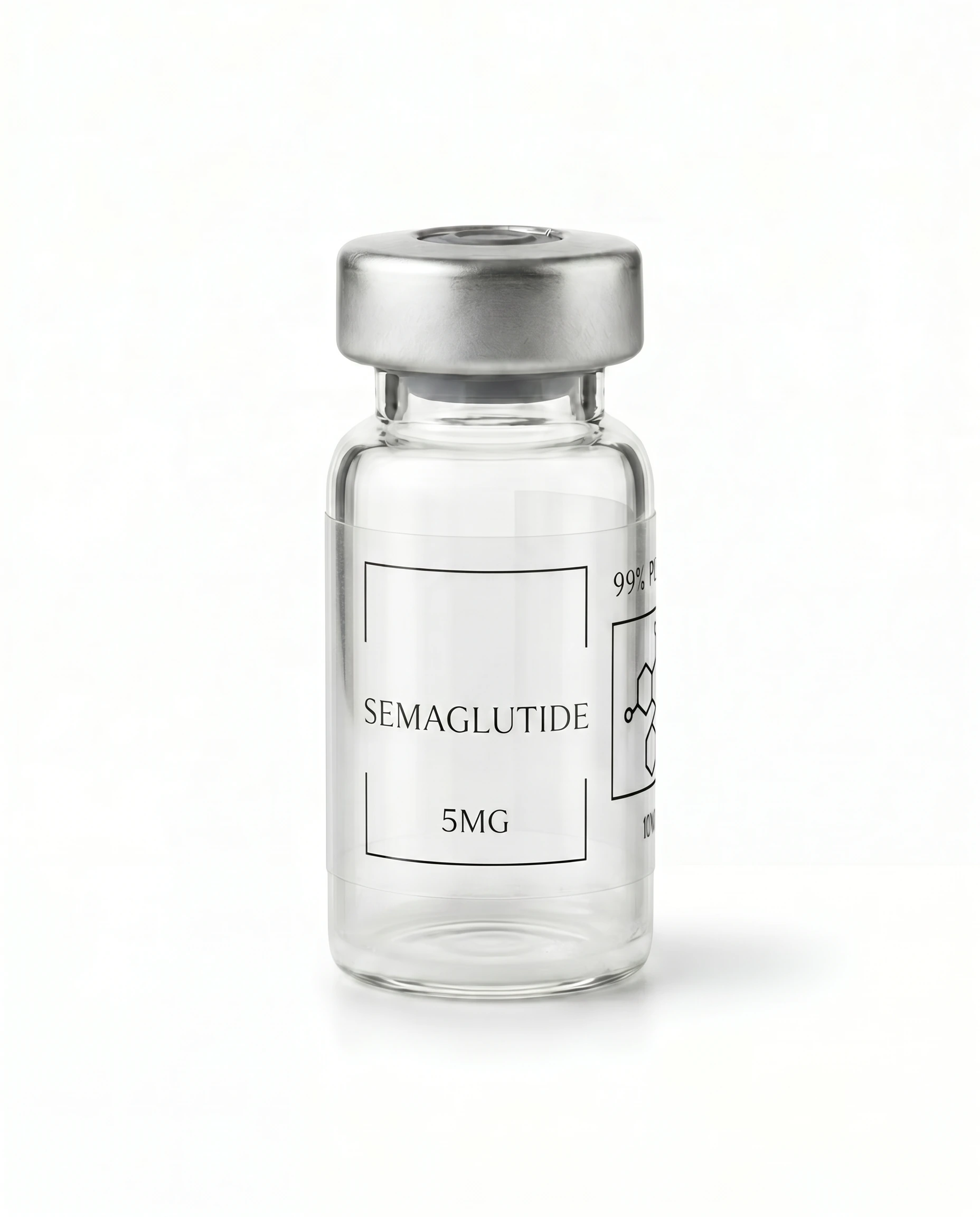
Semaglutide is a research peptide in the GLP-1 Metabolic class. GLP-1 receptor agonist; stimulates glucose-dependent insulin secretion, delays gastric emptying. It is studied at per-dose ranges of 0.25–2.4 mg / week (0.25–2.4 mg weekly), administered weekly sc over cycles of titration: 4 weeks per step. Supplied in Thailand by Thailand Peptides, Bangkok-based, research use only.
Long-acting GLP-1 analog. Well-characterised for glycemic control and body-weight reduction in T2DM and obesity.
Published and preclinical data are summarised below; dose ranges shown reflect protocols in the research literature and should be interpreted accordingly.
How does Semaglutide work?
Semaglutide is a GLP-1 receptor agonist with a fatty-acid side-chain enabling albumin binding, which extends half-life. It stimulates glucose-dependent insulin secretion from pancreatic β-cells, suppresses α-cell glucagon release, delays gastric emptying, and acts on hypothalamic GLP-1 receptors to reduce appetite and energy intake. The central satiety signal is a major contributor to the body-weight endpoints in STEP and SELECT.
Receptor binding affinity and post-receptor signalling for Semaglutide remain areas of active investigation; several proposed effects within the GLP-1 Metabolic class are currently supported only by in-vitro or rodent data, and should be interpreted accordingly.
Semaglutide pharmacokinetics
- Half-life
- Approximately 165 hours (~7 days) after subcutaneous administration, enabling weekly dosing.
- Bioavailability
- SC bioavailability ~89%; oral formulation (Rybelsus) achieves ~1% bioavailability via SNAC co-formulation.
- Route of administration
- Subcutaneous injection (abdomen, thigh, upper arm) is the standard route for weekly dosing in Phase 3 trials.
- Metabolic clearance
- Hepatic and renal proteolytic cleavage of the peptide backbone; no unchanged peptide in urine.
Semaglutide research timeline
- 2016 Marso et al., SUSTAIN-6 demonstrates CV-outcome benefit in type 2 diabetes (N Engl J Med).
- 2021 Wilding et al., STEP 1 obesity trial shows ~15% weight loss at 68 weeks (N Engl J Med).
- 2023 Lincoff et al., SELECT shows CV-outcome benefit in obesity without diabetes (N Engl J Med).
Semaglutide dosage & protocol
Reference protocol for Semaglutide (research context only, drawn from published literature):
- Per dose: 0.25–2.4 mg / week
- Weekly total: 0.25–2.4 mg
- Frequency: Weekly SC
- Cycle: Titration: 4 weeks per step
Semaglutide injection & handling
- Reconstitution
- Supplied as research solution or lyophilised powder; research reconstitution is typically 2 mg powder in 2 mL bacteriostatic water to 1 mg/mL.
- Storage
- Refrigerated at 2–8 °C; clinical pens permit room-temperature storage for up to 56 days after first use.
- Sites used in the research literature
- Subcutaneous abdomen, thigh, or upper arm; clinical guidance recommends rotating sites weekly.
Handling notes reflect methods used in published research protocols, not medical dosing guidance.
Stacking Semaglutide
Commonly referenced pairing with Semaglutide: Monotherapy preferred. Stacking rationale should be grounded in complementary mechanisms, not additive speculation; interactions at shared receptors or enzymatic pathways should be accounted for. Both compounds in a Semaglutide stack are supplied by Thailand Peptides on the same order via the Bangkok research desk.
Contraindications
MTC / MEN-2 personal or family history, pancreatitis. Additional caution is warranted in individuals with hepatic or renal impairment, endocrine disorders, or concurrent pharmacotherapy affecting the pathways described above.
Research summaries
Further reading
- Fundamentals · 9 min read Understanding Peptide Reconstitution: A Research Guide Practical guide to reconstituting lyophilized research peptides. Choosing a diluent, concentration math, injection-site-ready volumes, and the literature…
- Fundamentals · 10 min read Subcutaneous vs Intramuscular Injection: Research Considerations The two main parenteral routes for research peptides behave differently. This guide covers the pharmacokinetic differences, bioavailability, accidental…
- Buyer guide · 10 min read Best Peptides for Fat Loss: A Research Comparison Research comparison of Semaglutide, Tirzepatide, Retatrutide, AOD-9604, and 5-Amino-1MQ for body-composition research.
- Deep dive · 12 min read Semaglutide vs Tirzepatide: Comparing Clinical Trial Data Trial-level walkthrough of the semaglutide and tirzepatide programmes. SURPASS, SURMOUNT, STEP, SUSTAIN, SELECT: what each trial measured, how the two…
Citations
- Wilding JPH, et al. Once-Weekly Semaglutide in Adults with Overweight or Obesity (STEP 1). N Engl J Med. 2021. PMID: 33567185
- Marso SP, et al. Semaglutide and Cardiovascular Outcomes in Patients with Type 2 Diabetes (SUSTAIN-6). N Engl J Med. 2016. PMID: 27633186
- Lincoff AM, et al. Semaglutide and Cardiovascular Outcomes in Obesity without Diabetes (SELECT). N Engl J Med. 2023. PMID: 37952131
References curated from PubMed. Additional literature summarised in the Thailand Peptides research library.