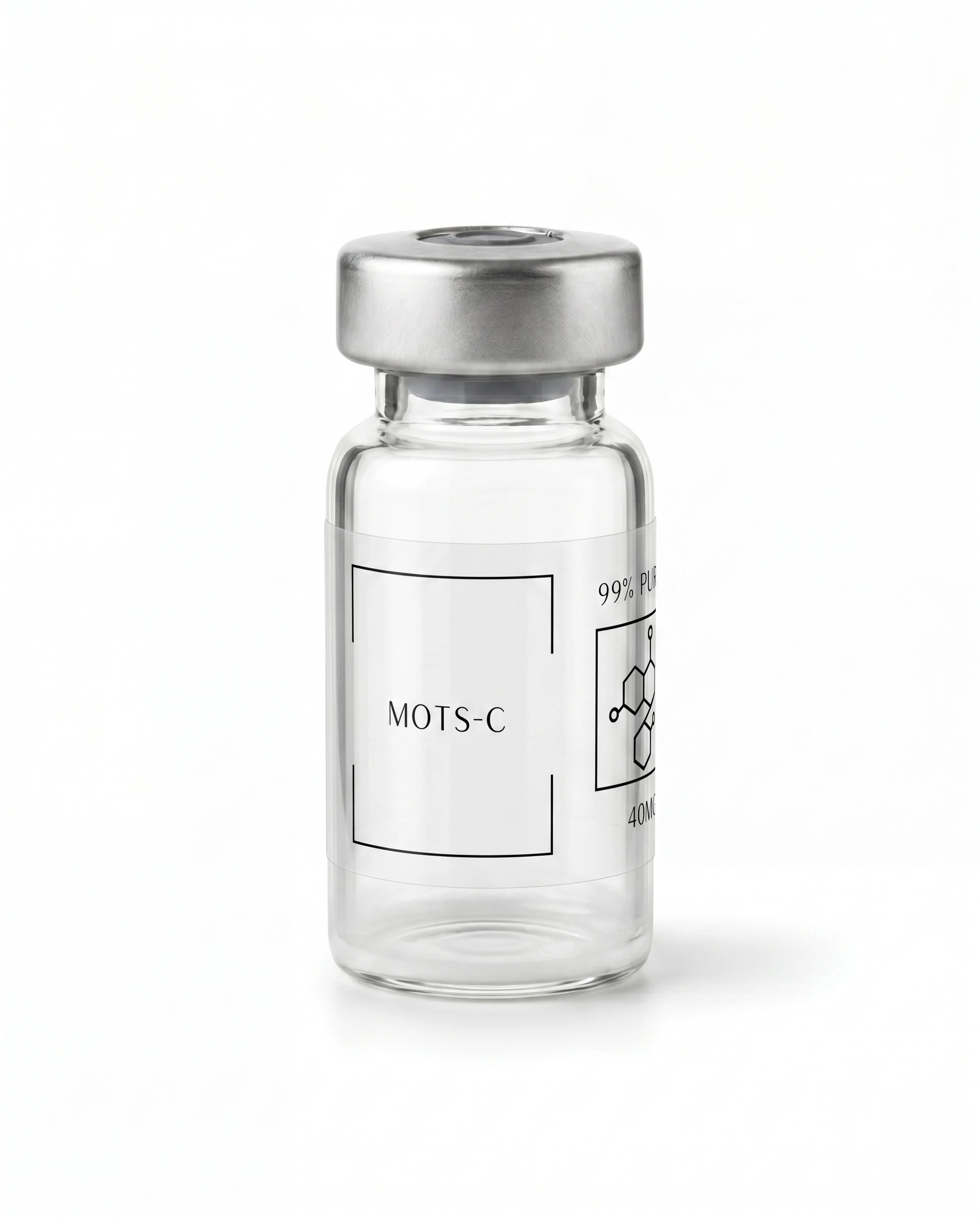
Quick answers
What is MOTS-c and what is it used for in research?
How does MOTS-c work?
What is the typical MOTS-c research dose?
Where can I buy MOTS-c in Thailand?
How fast can MOTS-c be delivered in Thailand?
What is MOTS-c?
MOTS-c is a research peptide in the Longevity & Cellular class. Mitochondrial-derived peptide; activates AMPK, improves metabolic flexibility. It is studied at per-dose ranges of 5–10 mg × 3 / week (15–30 mg weekly), administered 3× weekly sc over cycles of 8–12 weeks. Supplied in Thailand by Thailand Peptides, Bangkok-based, research use only.
16-aa mitochondrial-encoded peptide. Activates AMPK; preclinical data in insulin sensitivity and exercise capacity.
Published and preclinical data are summarised below; dose ranges shown reflect protocols in the research literature and should be interpreted accordingly.
How does MOTS-c work?
MOTS-c is encoded within the mitochondrial 12S rRNA gene and acts as a signalling peptide between mitochondria and the nucleus. It activates AMP-activated protein kinase (AMPK) via modulation of the folate–methionine cycle, improves insulin sensitivity, and translocates to the nucleus under metabolic stress where it interacts with stress-response transcription factors. Exercise acutely elevates circulating MOTS-c in animal and human studies.
Receptor binding affinity and post-receptor signalling for MOTS-c remain areas of active investigation; several proposed effects within the Longevity & Cellular class are currently supported only by in-vitro or rodent data, and should be interpreted accordingly.
MOTS-c pharmacokinetics
- Half-life
- Short systemic half-life for this 16-amino-acid mitochondrial-derived peptide.
- Bioavailability
- SC bioavailability used in preclinical protocols; endogenous MOTS-c is exercise-induced.
- Route of administration
- Subcutaneous injection 2–3 times weekly in research protocols.
- Metabolic clearance
- Proteolytic; detailed human PK remains under investigation.
MOTS-c research timeline
- 2015 Lee et al., MOTS-c promotes metabolic homeostasis via AMPK (Cell Metab).
- 2021 Reynolds et al., MOTS-c as exercise-induced regulator of age-dependent physical decline (Nat Commun).
MOTS-c dosage & protocol
Reference protocol for MOTS-c (research context only, drawn from published literature):
- Per dose: 5–10 mg × 3 / week
- Weekly total: 15–30 mg
- Frequency: 3× weekly SC
- Cycle: 8–12 weeks
MOTS-c injection & handling
- Reconstitution
- Typical research prep: 10 mg vial + 2–3 mL bacteriostatic water, yielding 3.3–5 mg/mL.
- Storage
- Lyophilised powder at −20 °C; reconstituted solution refrigerated and used within research-protocol timeframes.
- Sites used in the research literature
- Subcutaneous abdomen; 3× weekly dosing benefits from site rotation.
Handling notes reflect methods used in published research protocols, not medical dosing guidance.
Stacking MOTS-c
Commonly referenced pairing with MOTS-c: Monotherapy. Stacking rationale should be grounded in complementary mechanisms, not additive speculation; interactions at shared receptors or enzymatic pathways should be accounted for. Both compounds in a MOTS-c stack are supplied by Thailand Peptides on the same order via the Bangkok research desk.
Contraindications
Unestablished long-term data. Additional caution is warranted in individuals with hepatic or renal impairment, endocrine disorders, or concurrent pharmacotherapy affecting the pathways described above.
Research summaries
Further reading
- Fundamentals · 9 min read Understanding Peptide Reconstitution: A Research Guide Practical guide to reconstituting lyophilized research peptides. Choosing a diluent, concentration math, injection-site-ready volumes, and the literature…
- Fundamentals · 10 min read Injection Site Selection in Peptide Research How injection site choice affects peptide absorption: abdomen, thigh, upper arm, and the research literature on site-driven pharmacokinetic differences…
- Buyer guide · 9 min read Best Peptides for Anti-Aging: A Research Comparison Research comparison of Epithalon, MOTS-c, GHK-Cu, Thymosin-α1, and NAD+ for longevity and cellular-aging research. Bangkok research-grade.
- Deep dive · 11 min read MOTS-c: Mitochondrial-Derived Peptides in Longevity Research Deep-dive into MOTS-c pharmacology. The mitochondrial-encoded peptide, its AMPK activation mechanism, exercise-induced production, and the emerging…
Citations
- Lee C, et al. The mitochondrial-derived peptide MOTS-c promotes metabolic homeostasis and reduces obesity and insulin resistance. Cell Metab. 2015. PMID: 25738459
- Reynolds JC, et al. MOTS-c is an exercise-induced mitochondrial-encoded regulator of age-dependent physical decline and muscle homeostasis. Nat Commun. 2021. PMID: 33473109
References curated from PubMed. Additional literature summarised in the Thailand Peptides research library.