Quick answers
What is Pinealon and what is it used for in research?
How does Pinealon work?
What is the typical Pinealon research dose?
Where can I buy Pinealon in Thailand?
How fast can Pinealon be delivered in Thailand?
What is Pinealon?
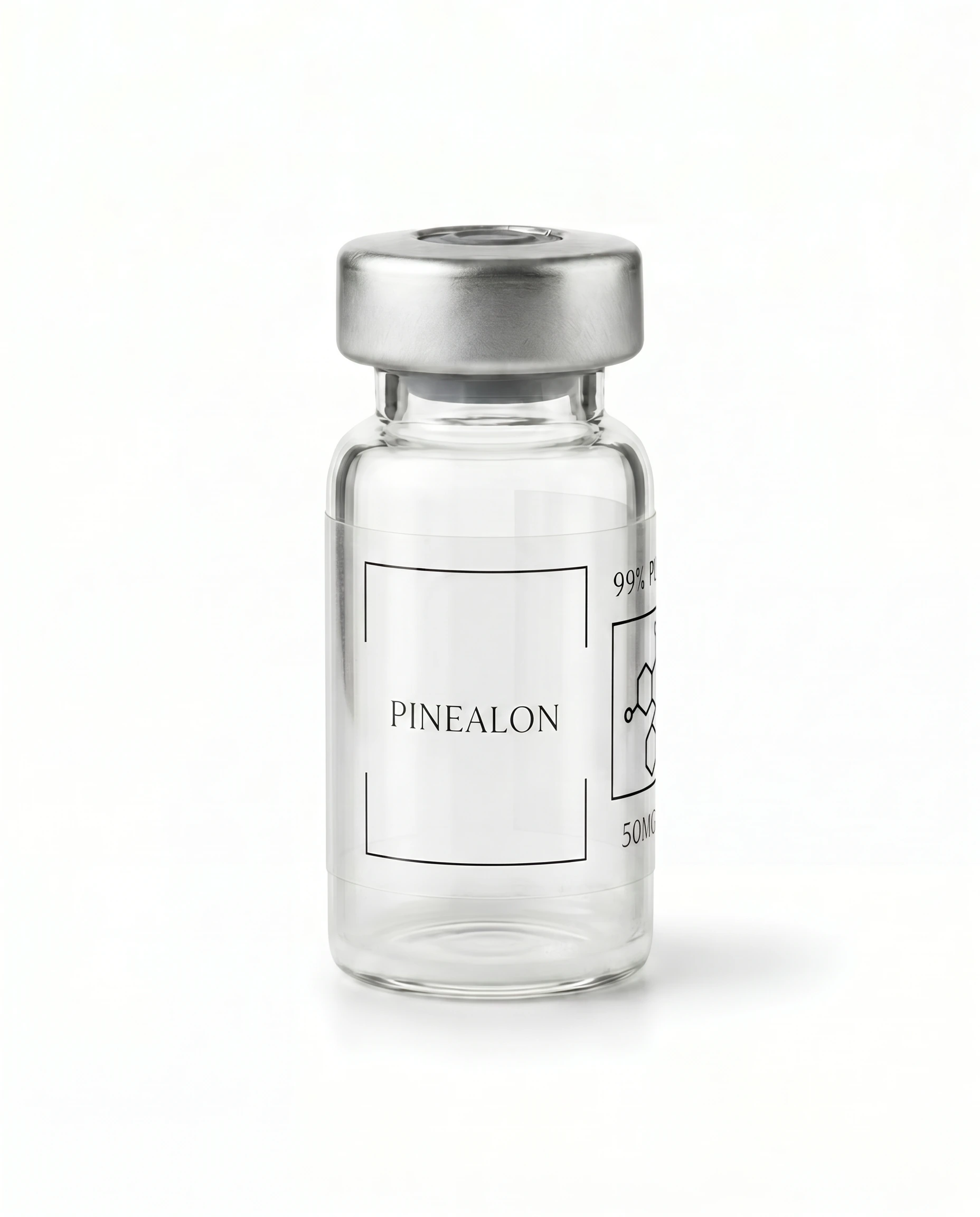
Pinealon is a research peptide in the Longevity & Cellular class. Tripeptide studied for neuroprotection and cognitive function. It is studied at per-dose ranges of 3–5 mg / day (21–35 mg weekly), administered daily sc over cycles of 10 day pulse. Supplied in Thailand by Thailand Peptides, Bangkok-based, research use only.
Khavinson-group tripeptide. Preclinical neuroprotective activity; limited human data.
Published and preclinical data are summarised below; dose ranges shown reflect protocols in the research literature and should be interpreted accordingly.
How does Pinealon work?
Pinealon is a synthetic tripeptide developed within the Khavinson short-peptide programme, directed at preserving or restoring pineal and neuronal function. Preclinical literature describes neuroprotective activity against oxidative stress and excitotoxicity, with claimed cognitive-performance endpoints in rodent models. Human clinical data are limited; the compound is not registered in mainstream pharmacopoeias.
Receptor binding affinity and post-receptor signalling for Pinealon remain areas of active investigation; several proposed effects within the Longevity & Cellular class are currently supported only by in-vitro or rodent data, and should be interpreted accordingly.
Pinealon pharmacokinetics
- Half-life
- Short systemic half-life for this tripeptide; human PK parameters limited in published literature.
- Bioavailability
- SC route standard in Khavinson-group protocols.
- Route of administration
- Subcutaneous injection daily in short (10-day) courses.
- Metabolic clearance
- Rapid proteolytic clearance.
Pinealon research timeline
- 2000s–2010s Khavinson group, sequential preclinical and limited clinical reports on neuroprotection and cognitive endpoints.
Pinealon dosage & protocol
Reference protocol for Pinealon (research context only, drawn from published literature):
- Per dose: 3–5 mg / day
- Weekly total: 21–35 mg
- Frequency: Daily SC
- Cycle: 10 day pulse
Pinealon injection & handling
- Reconstitution
- Typical research prep: 10 mg vial + 2 mL bacteriostatic water, yielding 5 mg/mL.
- Storage
- Lyophilised powder at −20 °C; reconstituted solution refrigerated over the 10-day course.
- Sites used in the research literature
- Subcutaneous abdomen, daily for 10 days.
Handling notes reflect methods used in published research protocols, not medical dosing guidance.
Stacking Pinealon
Commonly referenced pairing with Pinealon: Epithalon. Stacking rationale should be grounded in complementary mechanisms, not additive speculation; interactions at shared receptors or enzymatic pathways should be accounted for. Both compounds in a Pinealon stack are supplied by Thailand Peptides on the same order via the Bangkok research desk.
Contraindications
Limited data. Additional caution is warranted in individuals with hepatic or renal impairment, endocrine disorders, or concurrent pharmacotherapy affecting the pathways described above.
Further reading
- Fundamentals · 9 min read Understanding Peptide Reconstitution: A Research Guide Practical guide to reconstituting lyophilized research peptides. Choosing a diluent, concentration math, injection-site-ready volumes, and the literature…
- Fundamentals · 10 min read Injection Site Selection in Peptide Research How injection site choice affects peptide absorption: abdomen, thigh, upper arm, and the research literature on site-driven pharmacokinetic differences…
- Buyer guide · 9 min read Best Peptides for Anti-Aging: A Research Comparison Research comparison of Epithalon, MOTS-c, GHK-Cu, Thymosin-α1, and NAD+ for longevity and cellular-aging research. Bangkok research-grade.
- Deep dive · 10 min read Epithalon and Telomerase: Research Background Deep-dive into Epithalon pharmacology. Khavinson-group origin, telomerase activation hypothesis, pineal-melatonin effects, chromatin reactivation, and…
Citations
- Khavinson VK, et al. Pinealon increases cell viability by suppression of free radical levels and activating proliferative processes. Rejuvenation Res. 2011. PMID: 21978084
- Arutjunyan A, et al. Pinealon protects the rat offspring from prenatal hyperhomocysteinemia. Int J Clin Exp Med. 2012. PMID: 22567179
References curated from PubMed. Additional literature summarised in the Thailand Peptides research library.