Quick answers
What is NAD+ and what is it used for in research?
How does NAD+ work?
What is the typical NAD+ research dose?
Where can I buy NAD+ in Thailand?
How fast can NAD+ be delivered in Thailand?
What is NAD+?
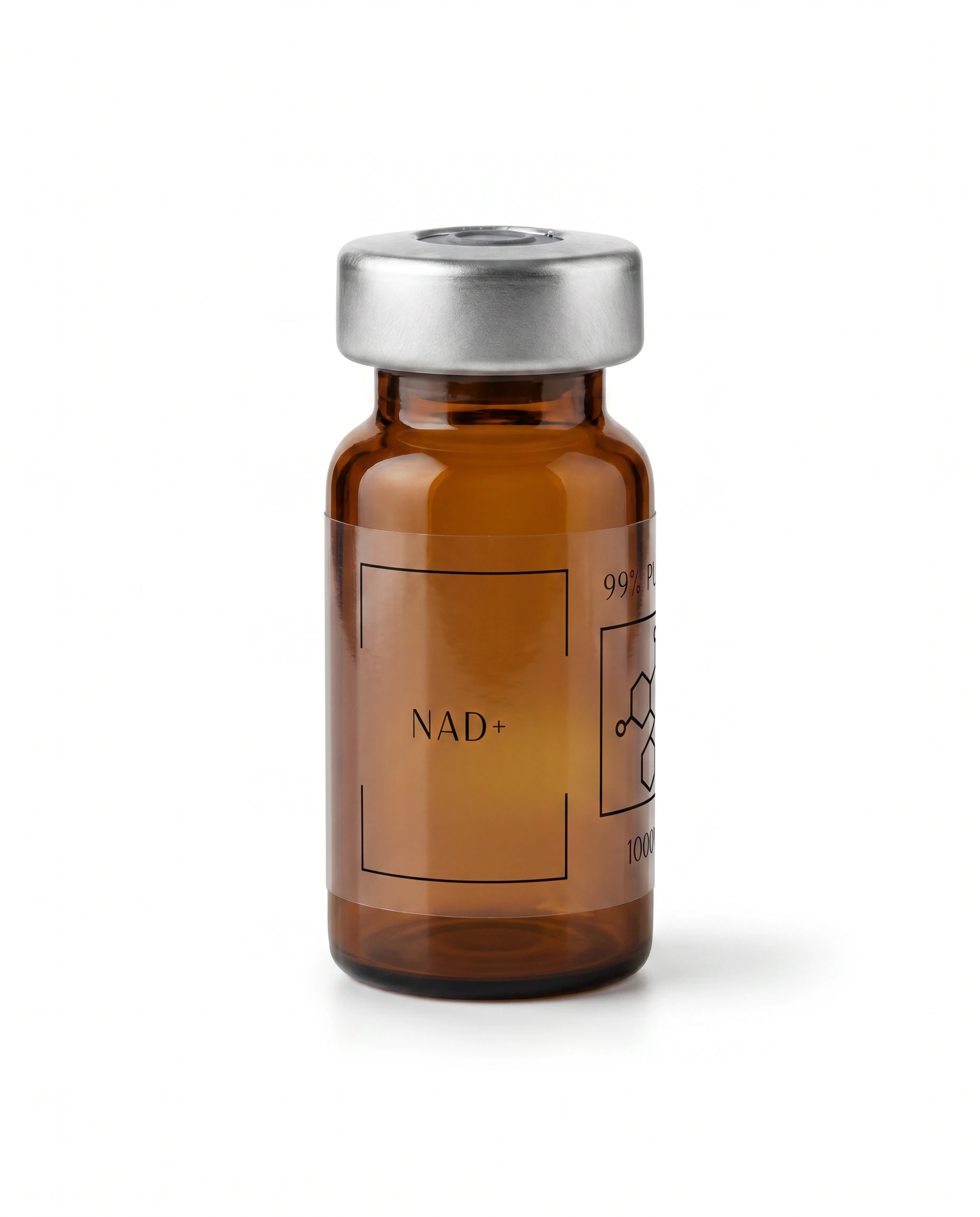
NAD+ is a research peptide in the Longevity & Cellular class. Nicotinamide adenine dinucleotide; replenishes cellular NAD+ pools for mitochondrial bioenergetics and sirtuin signaling. It is studied at per-dose ranges of 100–500 mg / day (0.7–3.5 g weekly), administered daily or prn sc/iv over cycles of 4–12 week pulses. Supplied in Thailand by Thailand Peptides, Bangkok-based, research use only.
Coenzyme NAD+ delivered subcutaneously or via slow IV; substrate for sirtuins, PARP, and CD38. Investigated for mitochondrial function, metabolic resilience, and DNA-repair pathways.
Published and preclinical data are summarised below; dose ranges shown reflect protocols in the research literature and should be interpreted accordingly.
How does NAD+ work?
Primary mechanism: Nicotinamide adenine dinucleotide; replenishes cellular NAD+ pools for mitochondrial bioenergetics and sirtuin signaling. Research on NAD+ implicates downstream effects on related signalling cascades, with magnitude and clinical relevance dependent on dose, timing, and individual pharmacogenomic factors.
Receptor binding affinity and post-receptor signalling for NAD+ remain areas of active investigation; several proposed effects within the Longevity & Cellular class are currently supported only by in-vitro or rodent data, and should be interpreted accordingly.
NAD+ dosage & protocol
Reference protocol for NAD+ (research context only, drawn from published literature):
- Per dose: 100–500 mg / day
- Weekly total: 0.7–3.5 g
- Frequency: Daily or PRN SC/IV
- Cycle: 4–12 week pulses
Stacking NAD+
Commonly referenced pairing with NAD+: 5-Amino-1MQ, MOTS-c. Stacking rationale should be grounded in complementary mechanisms, not additive speculation; interactions at shared receptors or enzymatic pathways should be accounted for. Both compounds in a NAD+ stack are supplied by Thailand Peptides on the same order via the Bangkok research desk.
Contraindications
Active malignancy, severe hepatic impairment. Additional caution is warranted in individuals with hepatic or renal impairment, endocrine disorders, or concurrent pharmacotherapy affecting the pathways described above.
Citations
- Yoshino J, et al. NAD+ Intermediates: The Biology and Therapeutic Potential of NMN and NR. Cell Metab. 2018. PMID: 29249689
- Trammell SAJ, et al. Nicotinamide riboside is uniquely and orally bioavailable in mice and humans. Nat Commun. 2016. PMID: 27721479
- Martens CR, et al. Chronic nicotinamide riboside supplementation is well-tolerated and elevates NAD+ in healthy middle-aged and older adults. Nat Commun. 2018. PMID: 29599478
References curated from PubMed. Additional literature summarised in the Thailand Peptides research library.