Quick answers
What is 5-Amino-1MQ and what is it used for in research?
How does 5-Amino-1MQ work?
What is the typical 5-Amino-1MQ research dose?
Where can I buy 5-Amino-1MQ in Thailand?
How fast can 5-Amino-1MQ be delivered in Thailand?
What is 5-Amino-1MQ?
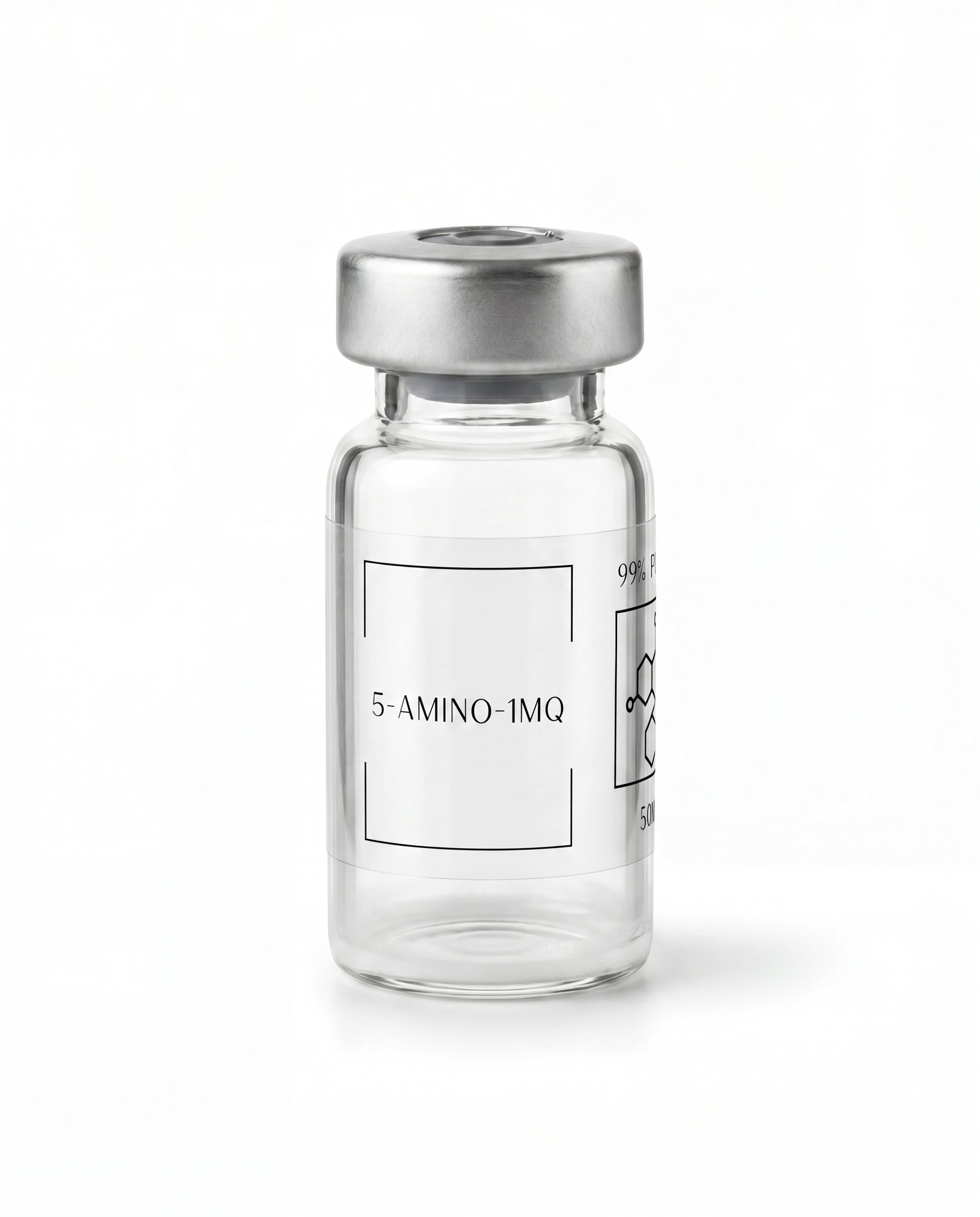
5-Amino-1MQ is a research peptide in the Body Recomposition class. Small-molecule NNMT inhibitor; preserves methyl donors and raises cellular NAD+. It is studied at per-dose ranges of 2–5 mg / day (14–35 mg weekly), administered oral daily over cycles of 8–12 weeks. Supplied in Thailand by Thailand Peptides, Bangkok-based, research use only.
Selective, membrane-permeable NNMT (nicotinamide N-methyltransferase) inhibitor. In preclinical models, inhibition of NNMT in adipose tissue preserves SAM/methyl donors, elevates cellular NAD+, and reduces adiposity while improving metabolic flexibility.
Published and preclinical data are summarised below; dose ranges shown reflect protocols in the research literature and should be interpreted accordingly.
How does 5-Amino-1MQ work?
5-Amino-1MQ (5-amino-1-methylquinolinium) is a selective small-molecule inhibitor of nicotinamide N-methyltransferase (NNMT). NNMT methylates nicotinamide to 1-methylnicotinamide, consuming SAM and redirecting nicotinamide away from NAD+ salvage. Inhibiting NNMT preserves cellular NAD+ pools and SAM availability, with preclinical readouts in adipocyte lipolysis, muscle energy metabolism, and metabolic flexibility. Strictly speaking this is a small-molecule inhibitor, not a peptide, but it is catalogued here alongside other metabolic research compounds.
Receptor binding affinity and post-receptor signalling for 5-Amino-1MQ remain areas of active investigation; several proposed effects within the Body Recomposition class are currently supported only by in-vitro or rodent data, and should be interpreted accordingly.
5-Amino-1MQ pharmacokinetics
- Half-life
- Small-molecule pharmacokinetics: preliminary rodent data describe an oral half-life on the order of several hours; comprehensive human PK is not yet published.
- Bioavailability
- Oral bioavailability is the distinguishing feature vs. injectable peptides in the catalogue.
- Route of administration
- Oral administration is the standard route in published and ongoing research.
- Metabolic clearance
- Hepatic and renal clearance pathways; detailed metabolite profiling published in the medicinal-chemistry literature.
5-Amino-1MQ research timeline
- 2018 Neelakantan et al., selective, membrane-permeable small-molecule NNMT inhibitors characterised (Biochem Pharmacol).
5-Amino-1MQ dosage & protocol
Reference protocol for 5-Amino-1MQ (research context only, drawn from published literature):
- Per dose: 2–5 mg / day
- Weekly total: 14–35 mg
- Frequency: Oral daily
- Cycle: 8–12 weeks
5-Amino-1MQ injection & handling
- Reconstitution
- Oral compound, no reconstitution required; supplied as powder or capsule.
- Storage
- Dry powder stored at room temperature in a sealed container protected from light and moisture.
- Sites used in the research literature
- Oral dosing, typically 2–5 mg per day in research-dosing literature.
Handling notes reflect methods used in published research protocols, not medical dosing guidance.
Stacking 5-Amino-1MQ
Commonly referenced pairing with 5-Amino-1MQ: Monotherapy. Stacking rationale should be grounded in complementary mechanisms, not additive speculation; interactions at shared receptors or enzymatic pathways should be accounted for. Both compounds in a 5-Amino-1MQ stack are supplied by Thailand Peptides on the same order via the Bangkok research desk.
Contraindications
Limited human safety data. Additional caution is warranted in individuals with hepatic or renal impairment, endocrine disorders, or concurrent pharmacotherapy affecting the pathways described above.
Further reading
- Fundamentals · 10 min read How to Read a Peptide Certificate of Analysis A batch-level COA is the single most informative document about a research peptide. This guide explains HPLC purity, mass-spec identity, impurity…
- Fundamentals · 12 min read Peptide Storage, Handling, and Stability Lyophilized storage at −20 °C, reconstituted solution shelf life at 2–8 °C, freeze-thaw damage, and the cold-chain literature that applies to research…
- Buyer guide · 10 min read Best Peptides for Fat Loss: A Research Comparison Research comparison of Semaglutide, Tirzepatide, Retatrutide, AOD-9604, and 5-Amino-1MQ for body-composition research.
- Deep dive · 10 min read 5-Amino-1MQ and NNMT Inhibition in Metabolic Research Deep-dive into 5-Amino-1MQ pharmacology. Honest framing as a small molecule rather than a peptide, NNMT inhibition mechanism, NAD+ preservation biology…
Citations
- Neelakantan H, et al. Selective and membrane-permeable small molecule inhibitors of nicotinamide N-methyltransferase reverse high fat diet-induced obesity in mice. Biochem Pharmacol. 2018. PMID: 29155147
References curated from PubMed. Additional literature summarised in the Thailand Peptides research library.