Quick answers
What is Tesamorelin and what is it used for in research?
How does Tesamorelin work?
What is the typical Tesamorelin research dose?
Where can I buy Tesamorelin in Thailand?
How fast can Tesamorelin be delivered in Thailand?
What is Tesamorelin?
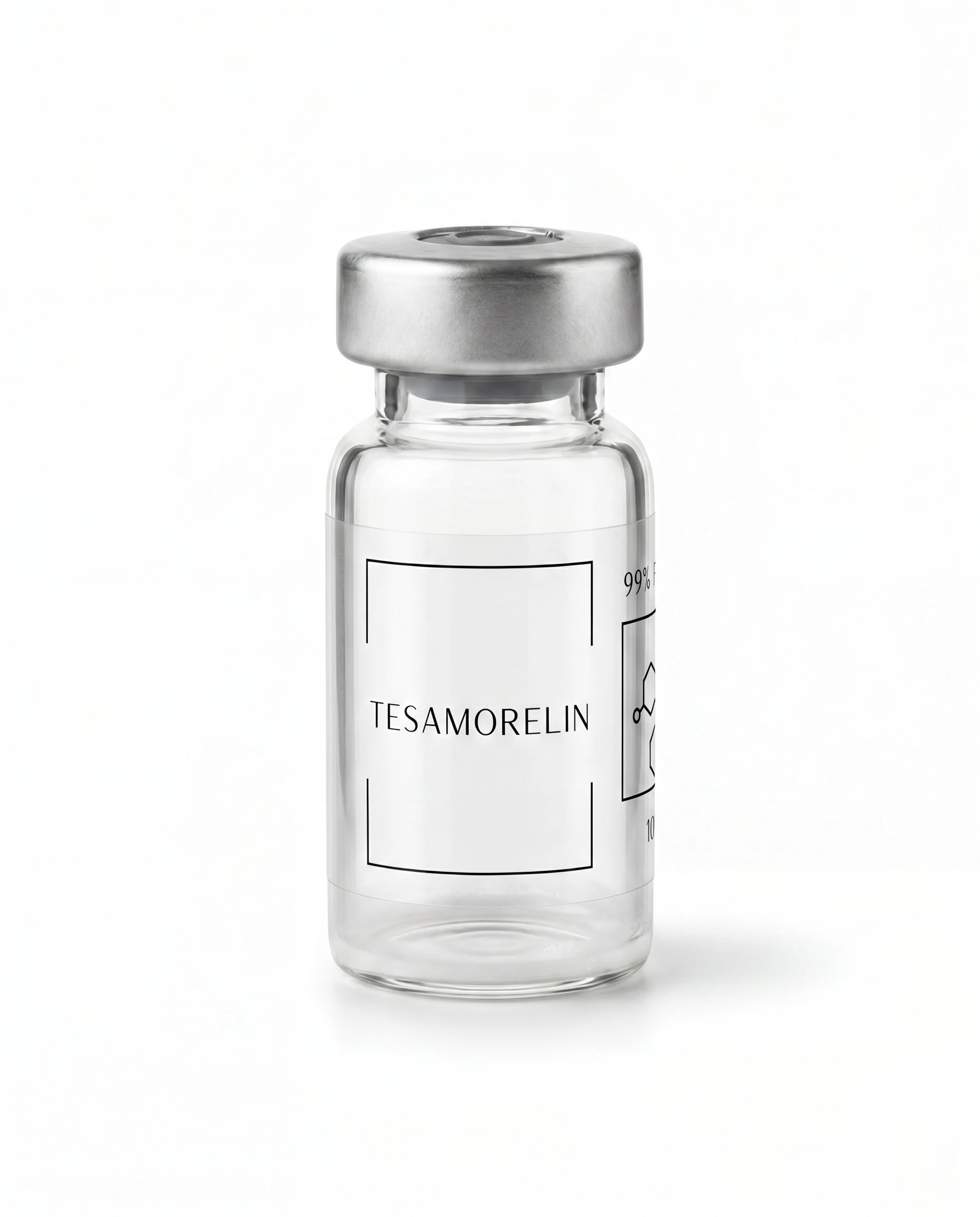
Tesamorelin is a research peptide in the GH Secretagogue class. Synthetic GHRH analog; stimulates endogenous growth-hormone pulsatility. It is studied at per-dose ranges of 1–2 mg / day (7–14 mg weekly), administered daily sc (evening) over cycles of 12 weeks on / 4 off. Supplied in Thailand by Thailand Peptides, Bangkok-based, research use only.
44-amino-acid GHRH analog. FDA-approved for HIV-associated visceral adiposity. Acts on pituitary somatotrophs; preserves physiological GH pulsatility.
Published and preclinical data are summarised below; dose ranges shown reflect protocols in the research literature and should be interpreted accordingly.
How does Tesamorelin work?
Tesamorelin is a 44-amino-acid synthetic analogue of human growth-hormone-releasing hormone (GHRH) with a stabilising N-terminal modification that resists DPP-IV degradation. It binds the GHRH receptor on anterior-pituitary somatotrophs, stimulating pulsatile GH release and downstream IGF-1 elevation. Clinical trials focused on HIV-associated lipodystrophy demonstrated selective visceral adipose reduction without appreciable change in subcutaneous fat.
Receptor binding affinity and post-receptor signalling for Tesamorelin remain areas of active investigation; several proposed effects within the GH Secretagogue class are currently supported only by in-vitro or rodent data, and should be interpreted accordingly.
Tesamorelin pharmacokinetics
- Half-life
- Short, approximately 26 minutes in healthy subjects after SC injection.
- Bioavailability
- SC bioavailability not fully characterised; GH response is the pharmacodynamic readout.
- Route of administration
- Subcutaneous injection once daily, typically in the evening to align with endogenous GH pulsatility.
- Metabolic clearance
- Rapid proteolytic degradation; no accumulation across daily dosing in Phase 3 trials.
Tesamorelin research timeline
- 2007 Falutz et al., reduction of excess abdominal fat in HIV-associated lipodystrophy (N Engl J Med).
- 2014 Stanley et al., tesamorelin reduces visceral adipose tissue and liver fat (JAMA).
Tesamorelin dosage & protocol
Reference protocol for Tesamorelin (research context only, drawn from published literature):
- Per dose: 1–2 mg / day
- Weekly total: 7–14 mg
- Frequency: Daily SC (evening)
- Cycle: 12 weeks on / 4 off
Tesamorelin injection & handling
- Reconstitution
- Reconstitute the 1–2 mg vial with sterile water or saline per product monograph to yield 1 mg/mL.
- Storage
- Lyophilised powder refrigerated at 2–8 °C; reconstituted solution used within hours per clinical protocol.
- Sites used in the research literature
- Subcutaneous abdominal injection, with site rotation to avoid local lipoatrophy.
Handling notes reflect methods used in published research protocols, not medical dosing guidance.
Stacking Tesamorelin
Commonly referenced pairing with Tesamorelin: Ipamorelin. Stacking rationale should be grounded in complementary mechanisms, not additive speculation; interactions at shared receptors or enzymatic pathways should be accounted for. Both compounds in a Tesamorelin stack are supplied by Thailand Peptides on the same order via the Bangkok research desk.
Contraindications
Active malignancy, pregnancy. Additional caution is warranted in individuals with hepatic or renal impairment, endocrine disorders, or concurrent pharmacotherapy affecting the pathways described above.
Research summaries
Further reading
- Fundamentals · 9 min read Understanding Peptide Reconstitution: A Research Guide Practical guide to reconstituting lyophilized research peptides. Choosing a diluent, concentration math, injection-site-ready volumes, and the literature…
- Fundamentals · 10 min read Injection Site Selection in Peptide Research How injection site choice affects peptide absorption: abdomen, thigh, upper arm, and the research literature on site-driven pharmacokinetic differences…
- Buyer guide · 9 min read Best Peptides for Muscle Growth: A Research Comparison Research comparison of Ipamorelin, CJC-1295, Tesamorelin, and Hexarelin for growth-hormone and lean-mass research.
- Deep dive · 11 min read Tesamorelin: From HIV Lipodystrophy Trials to Current Research The clinical research history of Tesamorelin. GHRH analog design, pivotal HIV lipodystrophy trials, VAT and liver fat endpoints, long-term safety, and…
Citations
- Falutz J, et al. Metabolic effects of a growth hormone-releasing factor in patients with HIV. N Engl J Med. 2007. PMID: 18057338
- Stanley TL, et al. Effect of tesamorelin on visceral fat and liver fat in HIV-infected patients with abdominal fat accumulation. JAMA. 2014. PMID: 25038357
References curated from PubMed. Additional literature summarised in the Thailand Peptides research library.