Quick answers
What is Kisspeptin-10 and what is it used for in research?
How does Kisspeptin-10 work?
What is the typical Kisspeptin-10 research dose?
Where can I buy Kisspeptin-10 in Thailand?
How fast can Kisspeptin-10 be delivered in Thailand?
What is Kisspeptin-10?
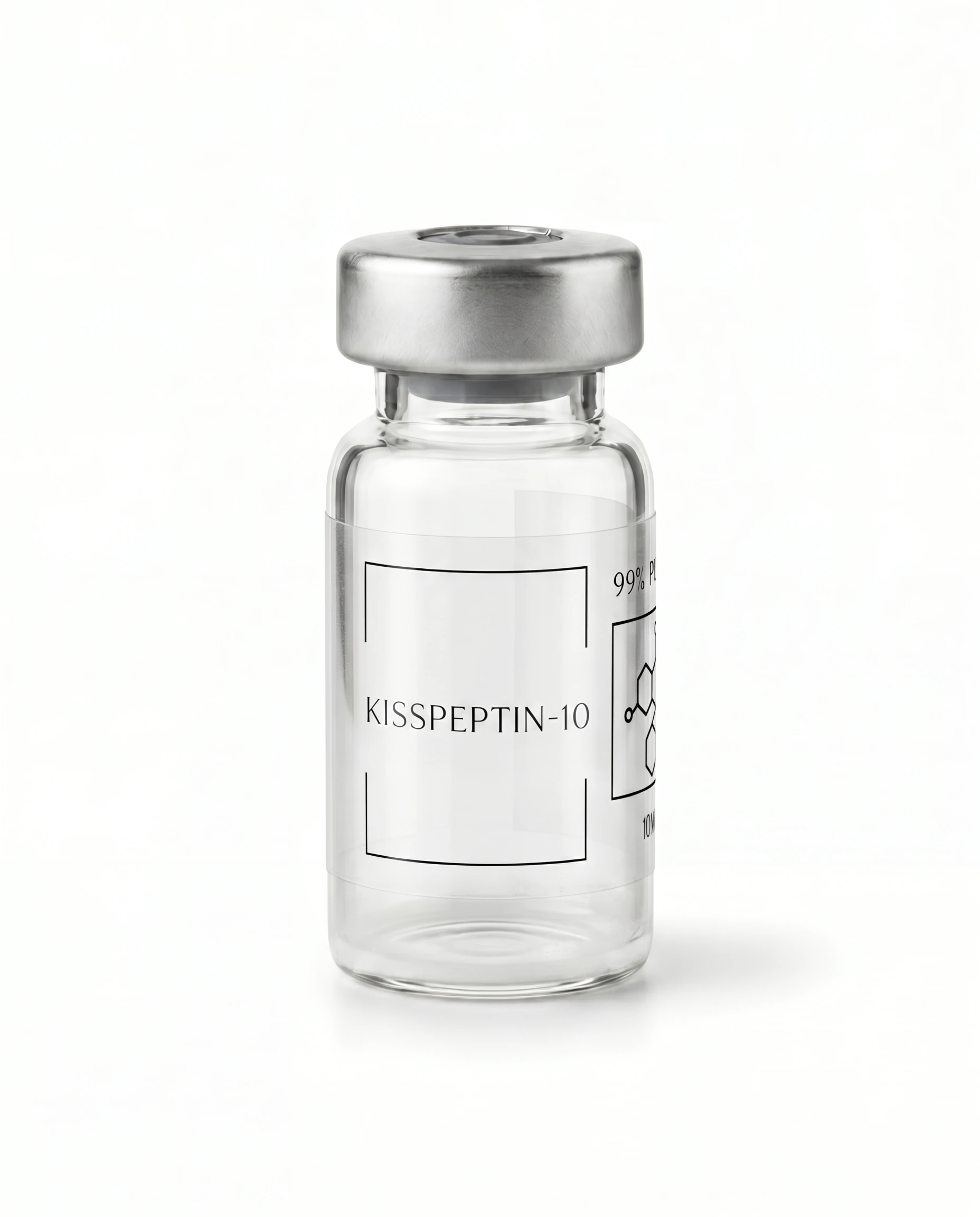
Kisspeptin-10 is a research peptide in the GH Secretagogue class. Stimulates GnRH release; investigated for HPG-axis modulation. It is studied at per-dose ranges of Research doses variable (Investigational weekly), administered investigational over cycles of investigational. Supplied in Thailand by Thailand Peptides, Bangkok-based, research use only.
10-amino-acid fragment of kisspeptin-54. Stimulates pulsatile GnRH and LH.
Published and preclinical data are summarised below; dose ranges shown reflect protocols in the research literature and should be interpreted accordingly.
How does Kisspeptin-10 work?
Kisspeptin-10 is a 10-amino-acid C-terminal fragment of the parent kisspeptin-54 peptide. It binds the KISS1R (GPR54) receptor on hypothalamic GnRH neurons, stimulating pulsatile GnRH secretion and downstream LH and FSH release. Research at Imperial College and elsewhere has investigated it as a diagnostic and therapeutic tool in hypothalamic amenorrhoea, infertility, and disorders of puberty.
Receptor binding affinity and post-receptor signalling for Kisspeptin-10 remain areas of active investigation; several proposed effects within the GH Secretagogue class are currently supported only by in-vitro or rodent data, and should be interpreted accordingly.
Kisspeptin-10 pharmacokinetics
- Half-life
- Extremely short, IV plasma half-life of approximately 3–4 minutes in humans; active research in longer-acting analogues.
- Bioavailability
- IV, IM, and SC routes all used in research protocols.
- Route of administration
- Subcutaneous or intravenous injection in controlled research settings.
- Metabolic clearance
- Rapid proteolytic clearance; downstream LH/FSH response persists beyond plasma clearance.
Kisspeptin-10 research timeline
- 2003 Seminara et al., discovery of KISS1R mutations in hypogonadotropic hypogonadism (N Engl J Med).
- 2010s Dhillo group (Imperial College), multiple studies on kisspeptin-based fertility protocols.
Kisspeptin-10 dosage & protocol
Reference protocol for Kisspeptin-10 (research context only, drawn from published literature):
- Per dose: Research doses variable
- Weekly total: Investigational
- Frequency: Investigational
- Cycle: Investigational
Kisspeptin-10 injection & handling
- Reconstitution
- Investigational; reconstituted per research-protocol specification.
- Storage
- Lyophilised powder at −20 °C.
- Sites used in the research literature
- Subcutaneous or intravenous per protocol.
Handling notes reflect methods used in published research protocols, not medical dosing guidance.
Stacking Kisspeptin-10
Commonly referenced pairing with Kisspeptin-10: Investigational. Stacking rationale should be grounded in complementary mechanisms, not additive speculation; interactions at shared receptors or enzymatic pathways should be accounted for. Both compounds in a Kisspeptin-10 stack are supplied by Thailand Peptides on the same order via the Bangkok research desk.
Contraindications
Limited safety data. Additional caution is warranted in individuals with hepatic or renal impairment, endocrine disorders, or concurrent pharmacotherapy affecting the pathways described above.
Further reading
- Fundamentals · 9 min read Understanding Peptide Reconstitution: A Research Guide Practical guide to reconstituting lyophilized research peptides. Choosing a diluent, concentration math, injection-site-ready volumes, and the literature…
- Fundamentals · 10 min read Injection Site Selection in Peptide Research How injection site choice affects peptide absorption: abdomen, thigh, upper arm, and the research literature on site-driven pharmacokinetic differences…
- Buyer guide · 9 min read Best Peptides for Muscle Growth: A Research Comparison Research comparison of Ipamorelin, CJC-1295, Tesamorelin, and Hexarelin for growth-hormone and lean-mass research.
- Deep dive · 11 min read Cycle Design for Growth Hormone Secretagogues How to design GHS cycles that preserve response over weeks of research dosing. Tachyphylaxis biology, GHRH analog chronicity, cycle length, break…
Citations
- Comninos AN, et al. Kisspeptin signaling in the amygdala modulates reproductive hormone secretion. Brain Struct Funct. 2016. PMID: 25758403
- Clarke H, Dhillo WS, Jayasena CN. Comprehensive Review on Kisspeptin and Its Role in Reproductive Disorders. Endocrinol Metab (Seoul). 2015. PMID: 26194072
References curated from PubMed. Additional literature summarised in the Thailand Peptides research library.