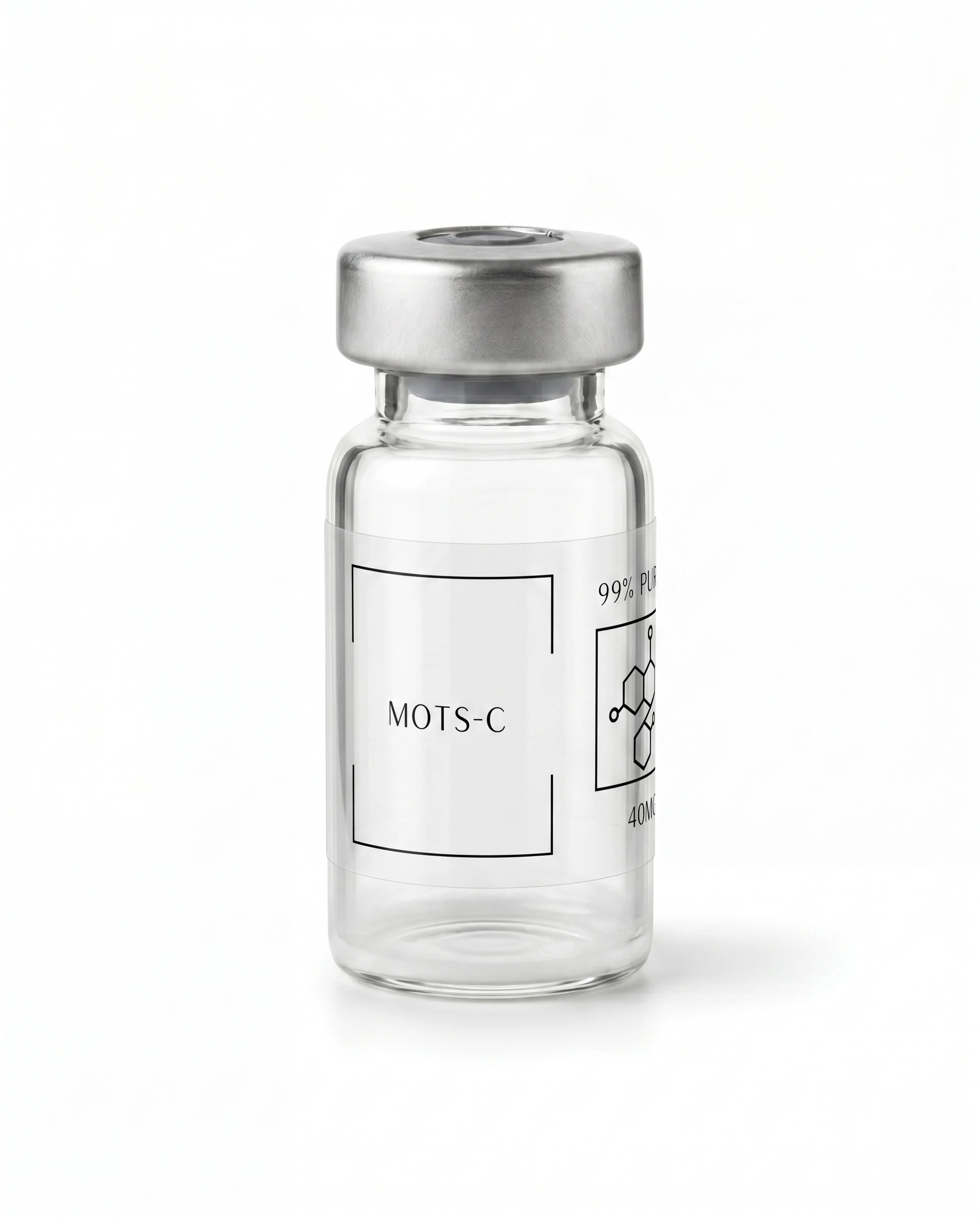
- MOTS-c is a 16-amino-acid mitochondrial-derived peptide encoded within the 12S rRNA region of the mitochondrial genome.
- Lee et al. (2015) established MOTS-c activates AMPK signalling, reduces obesity, and improves insulin resistance in murine models.
- Reynolds et al. (2021) showed MOTS-c expression is induced by exercise and counters age-dependent physical decline in mice.
- MOTS-c interacts synergistically with exercise to upregulate PGC-1α and improve glucose metabolism.
- Human clinical data is limited; current evidence is primarily preclinical (rodent), with translational potential under active investigation.
MOTS-c (Mitochondrial Open Reading Frame of the 12S rRNA-c) is one of the small group of mitochondrial-derived peptides (MDPs), encoded within mitochondrial DNA rather than the nuclear genome. It is a 16-amino-acid peptide whose research narrative connects mitochondrial biology, exercise physiology, and aging.
The 2015 discovery paper
Lee and colleagues' 2015 Cell Metabolism paper 1 is the canonical reference. The authors identified MOTS-c, characterised its expression and circulation in humans and rodents, and demonstrated that exogenous administration in mice produced AMPK pathway activation, increased fatty-acid oxidation, improved insulin sensitivity, and protected against diet-induced obesity. The mechanism connects to AMPK as a central metabolic sensor — when activated, it favours catabolic, energy-producing pathways and suppresses anabolic storage.
Exercise induction and aging
Reynolds and colleagues' 2021 Nature Communications paper 2 shifted the framing from pharmacology to physiology. The authors showed MOTS-c expression is induced by exercise in skeletal muscle, that circulating MOTS-c declines with age, and that MOTS-c administration in aged mice restores muscle homeostasis and physical capacity. This positioned MOTS-c as an exercise-mimetic candidate and a biomarker of mitochondrial-muscle health.
Synergy with exercise interventions
Yang and colleagues (2021, Biochim Biophys Acta Mol Basis Dis) 3 tested MOTS-c administration combined with exercise in mice. The combination produced larger increases in PGC-1α expression (a master regulator of mitochondrial biogenesis) and greater improvements in glucose metabolism than either intervention alone. The synergy is mechanistically consistent: both interventions activate the AMPK-PGC-1α axis, and combining them produces additive or supra-additive signalling.
Human translation
Mohtashami and colleagues' 2022 review 4 summarises the human-aging and disease evidence base. Direct human trials of exogenous MOTS-c remain limited; the strongest translational signal is correlational (circulating MOTS-c levels track with metabolic and exercise-capacity markers in observational cohorts). Mechanistic and dose-response questions for human use remain open.
For the long-form treatment, see the MOTS-c mitochondrial research article.
Citations
- Lee C, et al. The mitochondrial-derived peptide MOTS-c promotes metabolic homeostasis and reduces obesity and insulin resistance. Cell Metab. 2015. PMID: 25738459
- Reynolds JC, et al. MOTS-c is an exercise-induced mitochondrial-encoded regulator of age-dependent physical decline and muscle homeostasis. Nat Commun. 2021. PMID: 33473109
- Yang B, et al. MOTS-c interacts synergistically with exercise intervention to regulate PGC-1α expression, attenuate insulin resistance and enhance glucose metabolism. Biochim Biophys Acta Mol Basis Dis. 2021. PMID: 33722744
- Mohtashami Z, et al. MOTS-c, the Most Recent Mitochondrial Derived Peptide in Human Aging and Age-Related Diseases. Int J Mol Sci. 2022. PMID: 36233287
All references verified against PubMed via NCBI E-utilities.
This summary draws on the full-length article at /articles/mots-c-mitochondrial-research. The article is the canonical long-form treatment; this page is the research-summary re-presentation.