Quick answers
What is DSIP and what is it used for in research?
How does DSIP work?
What is the typical DSIP research dose?
Where can I buy DSIP in Thailand?
How fast can DSIP be delivered in Thailand?
What is DSIP?
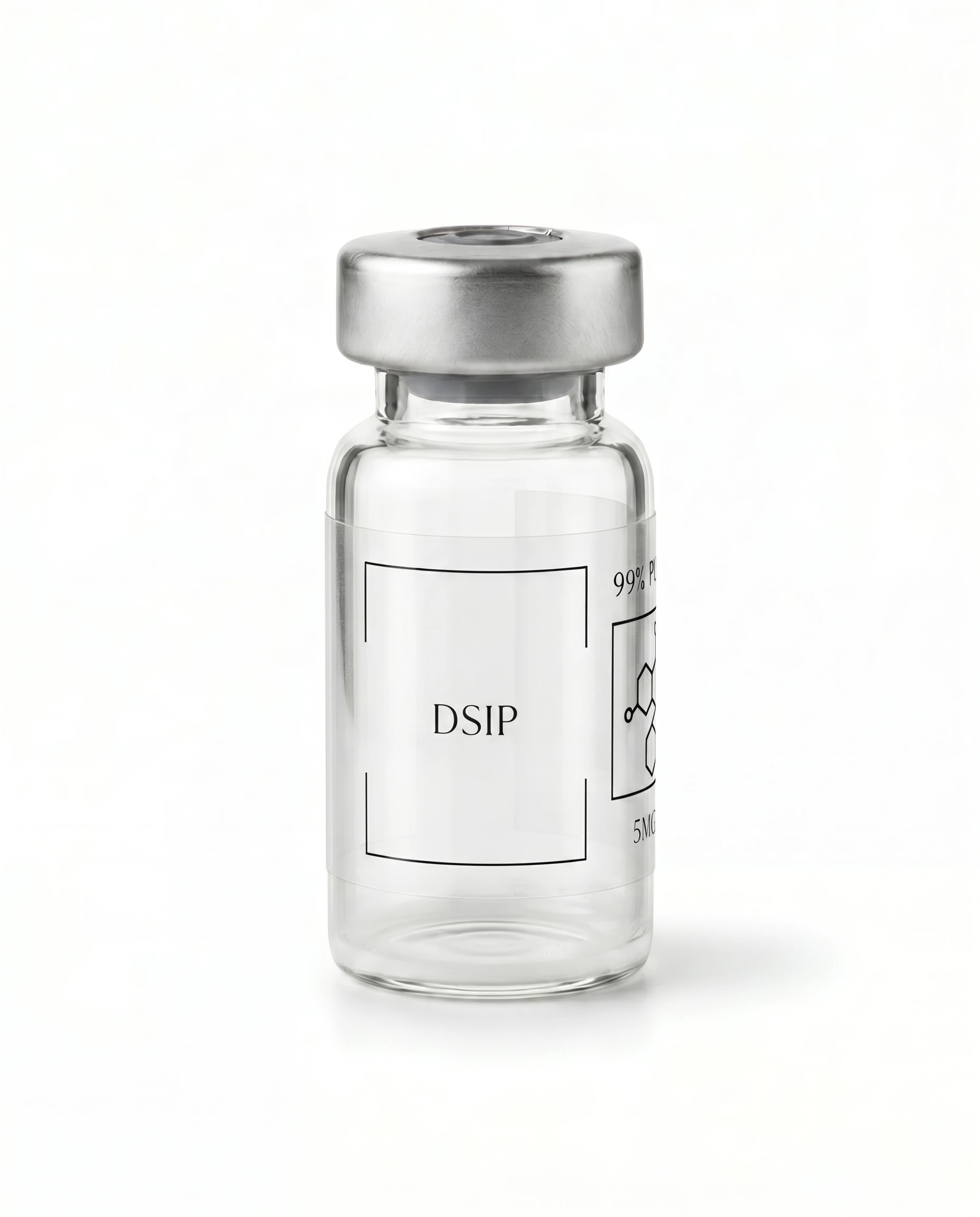
DSIP is a research peptide in the Cognitive & Nootropic class. Delta-sleep-inducing peptide; modulates sleep architecture. It is studied at per-dose ranges of 100–200 mcg / night (0.7–1.4 mg weekly), administered nightly sc over cycles of ongoing as needed. Supplied in Thailand by Thailand Peptides, Bangkok-based, research use only.
Nonapeptide originally isolated from rabbit cerebrospinal fluid. Investigated for sleep quality and chronic-pain modulation.
Published and preclinical data are summarised below; dose ranges shown reflect protocols in the research literature and should be interpreted accordingly.
How does DSIP work?
DSIP (delta-sleep-inducing peptide) is a nonapeptide originally isolated from rabbit cerebrospinal fluid. Preclinical work describes modulation of NREM sleep architecture, attenuation of stress-induced HPA-axis activation, and effects on chronic-pain endpoints. Specific receptor and downstream signalling pathways remain incompletely defined in the primary literature.
Receptor binding affinity and post-receptor signalling for DSIP remain areas of active investigation; several proposed effects within the Cognitive & Nootropic class are currently supported only by in-vitro or rodent data, and should be interpreted accordingly.
DSIP pharmacokinetics
- Half-life
- Limited published human pharmacokinetic data; animal studies describe short plasma half-life.
- Bioavailability
- SC and IV routes used in research; oral activity not established.
- Route of administration
- Subcutaneous injection nightly in research protocols investigating sleep architecture.
- Metabolic clearance
- Proteolytic clearance; precise metabolic pathways incompletely characterised.
DSIP research timeline
- 1977 Schoenenberger & Monnier, isolation and characterisation of DSIP from rabbit cerebrospinal fluid.
- 2000s Sequential pharmacology studies describe sleep-architecture and stress-modulation endpoints.
DSIP dosage & protocol
Reference protocol for DSIP (research context only, drawn from published literature):
- Per dose: 100–200 mcg / night
- Weekly total: 0.7–1.4 mg
- Frequency: Nightly SC
- Cycle: Ongoing as needed
DSIP injection & handling
- Reconstitution
- Typical research prep: 5 mg vial + 2–3 mL bacteriostatic water, yielding ~1.67–2.5 mg/mL.
- Storage
- Lyophilised powder at −20 °C; reconstituted solution refrigerated for up to 4 weeks in research protocols.
- Sites used in the research literature
- Subcutaneous abdomen, administered in the evening per published sleep-architecture protocols.
Handling notes reflect methods used in published research protocols, not medical dosing guidance.
Stacking DSIP
Commonly referenced pairing with DSIP: Monotherapy. Stacking rationale should be grounded in complementary mechanisms, not additive speculation; interactions at shared receptors or enzymatic pathways should be accounted for. Both compounds in a DSIP stack are supplied by Thailand Peptides on the same order via the Bangkok research desk.
Contraindications
Limited clinical data. Additional caution is warranted in individuals with hepatic or renal impairment, endocrine disorders, or concurrent pharmacotherapy affecting the pathways described above.
Further reading
- Fundamentals · 9 min read Understanding Peptide Reconstitution: A Research Guide Practical guide to reconstituting lyophilized research peptides. Choosing a diluent, concentration math, injection-site-ready volumes, and the literature…
- Fundamentals · 10 min read Injection Site Selection in Peptide Research How injection site choice affects peptide absorption: abdomen, thigh, upper arm, and the research literature on site-driven pharmacokinetic differences…
- Buyer guide · 8 min read Best Peptides for Sleep and Recovery: A Research Comparison Research comparison of DSIP, Selank, and MOTS-c for sleep-architecture and post-exertion recovery research.
- Deep dive · 11 min read Nootropic Peptide Mechanisms: A Research Overview Receptor-level comparison of the nootropic peptide class. Semax (ACTH-derived), Selank (tuftsin-derived), Cerebrolysin (porcine-brain peptide mix), and…
Citations
- Kovalzon VM, Strekalova TV. Delta sleep-inducing peptide (DSIP): a still unresolved riddle. J Neurochem. 2006. PMID: 16539679
- Graf MV, Kastin AJ. DSIP affects adrenergic stimulation of rat pineal N-acetyltransferase activity. Peptides. 1986. PMID: 3562314
References curated from PubMed. Additional literature summarised in the Thailand Peptides research library.